Dryer Problems We RouteWhat the Independent Dryer Pros Fix
Dryers are simpler than they look: a motor, a drum, a heat source and a path for air to leave. When one of those fails, the symptom usually tells a trained tech where to start.
No Heat, ElectricHeating Element, Thermal Fuse and Thermostats
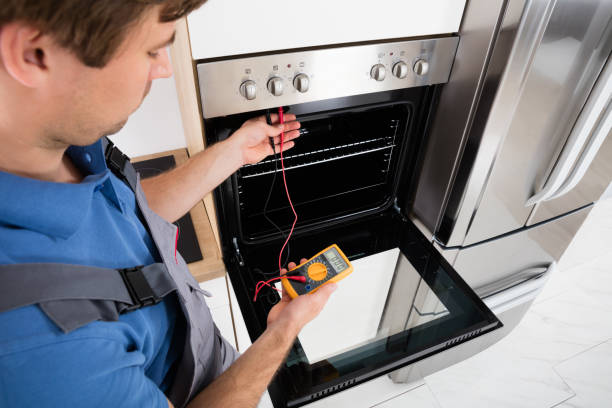
On an electric dryer, no heat usually means an open element coil, a blown thermal fuse, a tripped thermal cut-off, or a failed high-limit or cycling thermostat. One leg of a 240-volt breaker tripping can also leave the drum spinning with no heat. The tech meters each part in the heat circuit and checks voltage at the terminal block.
- Heating element replacement
- Thermal fuse and cut-off testing
- High-limit and cycling thermostats
No Heat, GasIgniter, Gas Valve Coils and Flame Sensor
Gas dryers light a glow bar igniter, then open the gas valve through a pair of solenoid coils. If the igniter glows but no flame follows, the coils are a classic failure. If nothing glows, the igniter or flame sensor is the usual suspect. The pro checks each part with a meter and reads gas pressure with a manometer.
- Glow bar igniter replacement
- Gas valve coil sets
- Flame sensor testing
Thumping and SquealingDrum Belt, Idler Pulley, Rollers and Glides
A rhythmic thump usually comes from flat spots on the drum rollers. A high squeal points to a dry idler pulley, and a scraping sound often means worn front drum glides or a felt seal that has slipped. A snapped drum belt leaves the motor running with the drum dead still. The technician removes the drum and swaps worn parts together when they have reached similar wear.
- Drum belt and idler pulley
- Drum rollers and axles
- Front glides and felt seals
Long Dry TimesRestricted Vent Run and Airflow
Restricted venting causes more slow-drying calls than any single part. A flattened foil transition hose, extra elbows, a run past the length the manual permits, or a lint plug at the roof or wall hood starves the dryer of airflow. The tech checks exhaust temperature and airflow at the cap, then recommends rigid metal duct where needed.
- Vent airflow testing
- Transition hose replacement
- Wall and roof cap lint clearing
Stops Early or OverdriesMoisture Sensor Bars and Auto-Dry Controls
Auto-dry cycles read moisture through two metal sensor bars inside the drum. Fabric softener film coats them, and the dryer shuts off while clothes are still damp. A faulty board or harness can do the opposite and run forever. The tech cleans the bars, tests the circuit and checks the control.
- Moisture sensor cleaning and testing
- Control board diagnosis
- Timer and cycle selector checks